Output-based pricing
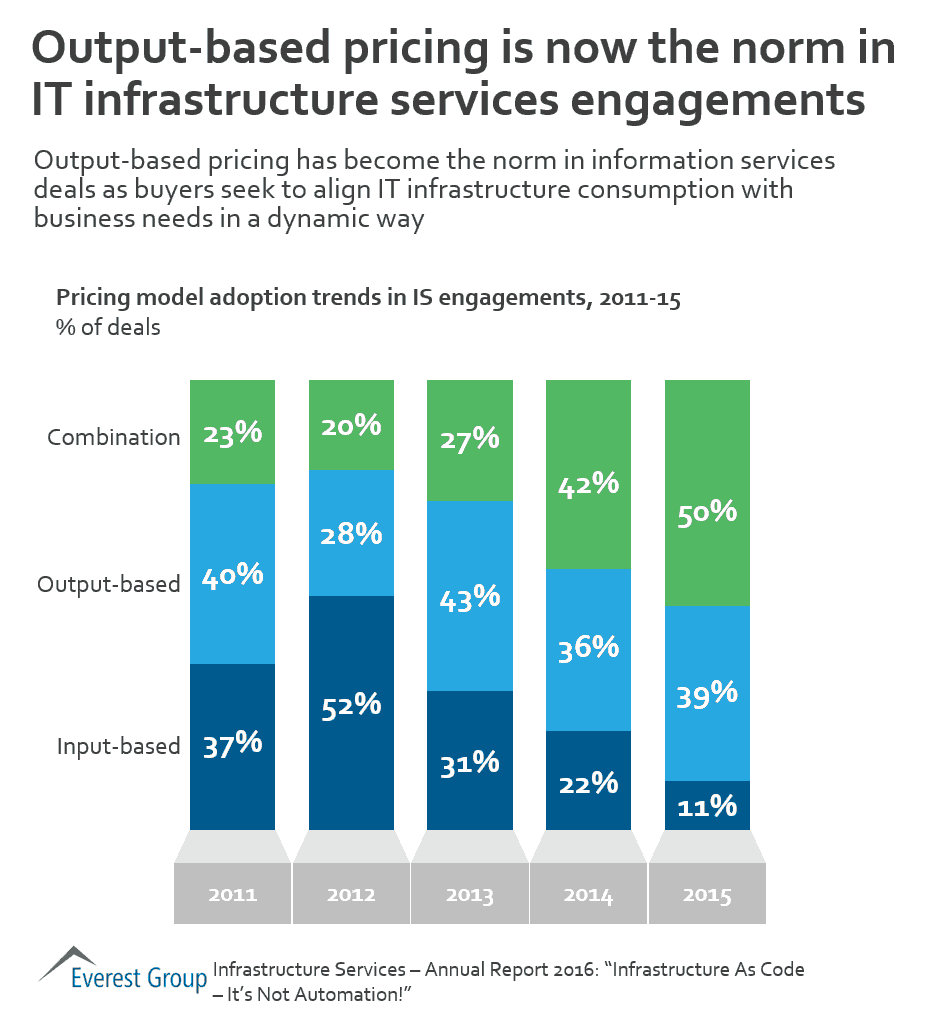
Output-based pricing has increased in popularity in infrastructure services and transactional business process outsourcing deals. More recently, enterprises have warmed up to the idea of using this pricing model for application services.
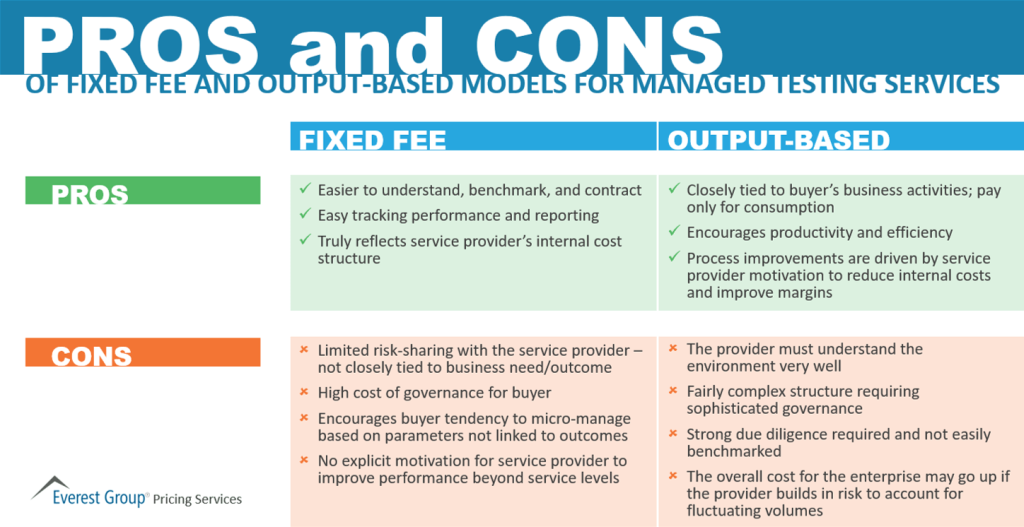
This should come as no surprise, given the benefits.
Our output-based pricing research offers market best practices data on business criticality, support coverage, ticket volumes, ticket type, usage, change frequency, underlying technology, and others.
Overall, output-based pricing brings a lot of transparency into the pricing equation and makes underlying delivery nuances clear. Enterprises’ procurement teams also find this pricing model attractive, as they can expect greater delivery certainty, better transparency, and more flexibility from the suppliers, leading to higher-value relationships.